Peptide Pureness Resolution Innovative Peptides-peptide Drug Discovery
Understanding Peptide Pureness: What 99%+ Actually Means

Inconsistent bit size distribution and morphology can affect bioavailability and security. BOC Sciences is geared up with instruments like DLS, TEM, SEM, and so on, to totally assess nanoparticle dimension, distribution, and microstructure. For us, pureness isn't simply a percentage-- it's a promise of honesty, uniformity, and regard for the science being done.
Peptide Useful Analysis In Biomedical Research
Various other techniques like electrophoresis, capillary electrophoresis (CE), and nuclear magnetic vibration (NMR) can also be utilized to evaluate peptide structure, fee, and pureness, making sure comprehensive characterization. In COA evaluation, it usually consists of HPLC pureness screening, mass spectrometry identity confirmation, and batch-specific paperwork showing the tested whole lot, approach, results, and date. For peptide pureness screening, reverse-phase HPLC is the typical theoretical model. The chromatographic pureness is after that computed by contrasting Learn more the location under the main peak with the complete location under all integrated peaks.
Peptide pureness refers to the amount of the right peptide in the peptide product. Nevertheless, for overall top quality assessment or the characterization of peptides for a range of applications, extra logical tests are suggested. For example, in order to make certain success in different peptide experiments, it might be needed to remove trifluoroacetic acid (TFA), or to examine the solubility of hydrophobic peptides prior to executing the required experiments. During the discovery, we make use of RP-HPLC combined with MS to determine the molecular weight of the peptide. The absolute quantity of the right peptide in an example is the product of the peptide material and the peptide purity. BOC Sciences has a top-tier peptide quality screening system, integrating sophisticated logical modern technologies and premium instrumentation to supply precise and reliable peptide top quality examination services.Clinical Aesthetic Appeals Product Advancement
If the COA details "complete impurities", that matches the pureness figure Check out the post right here (e.g., 98% pureness indicates 2% total contaminations). Lots of COAs also define well-known or "specified impurities" versus undefined ones, each with their individual percents if above a specific threshold. This level of detail aids scientists comprehend if any type of small peptide by-products are present. If you see multiple huge peaks of comparable elevation, you're taking a look at either a low-purity sample or a mix. If the major peak has a visible "shoulder"-- a bump on one side-- that usually indicates a carefully associated impurity (like a deletion peptide) that the column could not completely resolve. The peptide is passed through a straightforward purification step (frequently gel filtration or a quick reversed-phase cleaning) to remove salts, small-molecule results, and scavengers from the bosom step.In conclusion, recognizing peptide purity levels and qualities helps you make informed decisions for your experiments. A peptide's purity portion tells you how much of that example is the genuine bargain versus byproducts, with common study grades being around 95% up to 98-99% for additional pureness. Analytical HPLC and MS are your pals below-- HPLC measures purity, and MS verifies identity, together ensuring you know what remains in your tube.
Peptide Testing: Hplc & Mass Spectrometry Pureness Confirmation
- As a matter of fact, proteins and peptides are amongst the most widely used lab reagents, yet research studies have revealed that their top quality is frequently inadequate, causing bad information reproducibility.
- Lots of COAs additionally specify known or "defined impurities" versus unspecified ones, each with their individual percentages if over a certain threshold.
- Together with this peptide testing guide, those pages form the trust-methodology layer behind the product magazine.
- Matrix-assisted laser desorption ionization time-of-flight mass spectrometry (MALDI-TOF MS) and electrospray ionization mass spectrometry (ESI MS) are the two most commonly utilized methods.
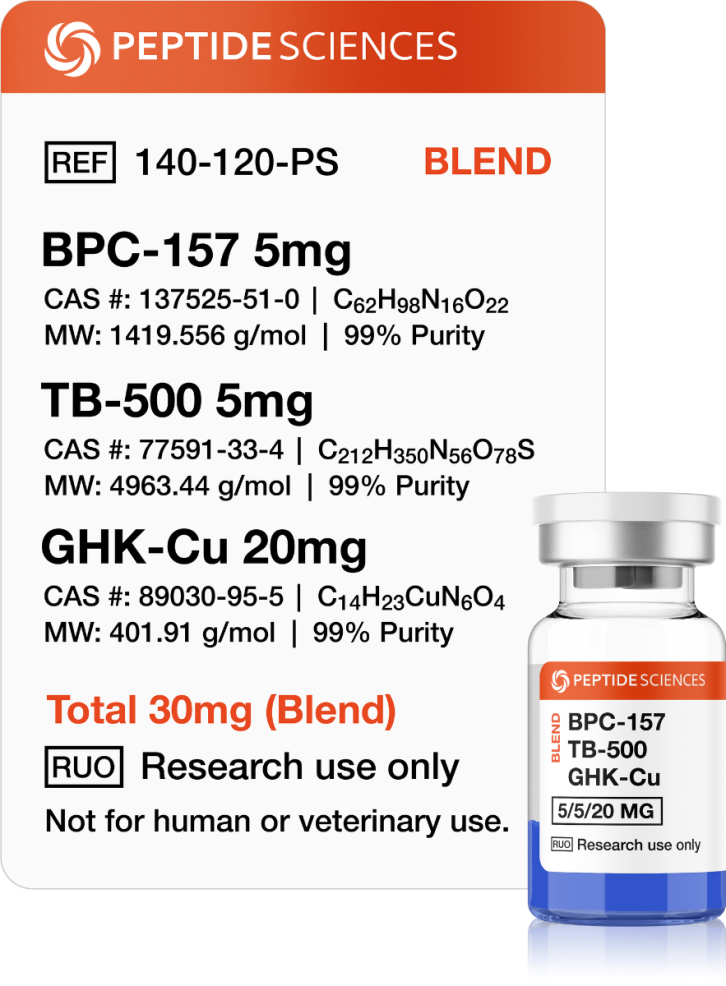
- They are classified "for study use just" to explain that they are intended for artificial insemination experiments or animal studies, not for any kind of human usage.
The gold requirement for determining peptide pureness is high-performance fluid chromatography, generally abbreviated as HPLC. If you see a pureness portion on a peptide item, it probably originated from an HPLC evaluation. This issues since peptides are developed one amino acid at a time via solid-phase peptide synthesis (SPPS). At each action, there's a tiny possibility that something fails-- an amino acid does not affix, the incorrect alteration takes place, or a side response creates an unexpected by-product. Over a chain of 10, 20, or 40 amino acids, those small per-step error rates compound.
These are important in the appropriate setting, yet they ought to be interpreted as method-specific evidence as opposed to an universal substitute for HPLC and MS. But peptide purity is arguably the single essential quality metric for any kind of research study peptide. It straight impacts the dependability and reproducibility of experimental outcomes. A peptide listed at 75% purity and one at 99% purity aren't just various grades-- they can create meaningfully various outcomes in the same assay. They are identified "for research use just" to explain that they are meant for in vitro experiments or pet researches, except any kind of form of human use. Actually, a lab offering peptide testing need to provide information satisfying the rigorous logical assumptions of firms like FDA and EMA [4] By utilizing a qualified third-party lab, peptide manufacturers or scientists make certain an honest and properly documented analysis of high quality, which is exactly what examiners try to find. Furthermore, recurring independent screening supports conformity in set release and quality control. Research laboratory validation for peptides implies utilizing clinical tests to verify a peptide's identification, pureness, and make-up. In practice, this often includes third-party or independent screening by an external lab to confirm that a peptide item in fact includes what the label asserts [2]